Start from the symptom
Samsung washer leaking.
Samsung says most washer leaks come from conditions you can correct: a damaged hose or o-ring, debris under the door gasket, a drain hose set too deep or too shallow, a dirty pump filter, too much detergent, or a washer that rests off level. Water dripping from the door after you open it is normal. A leak with the door closed is not.
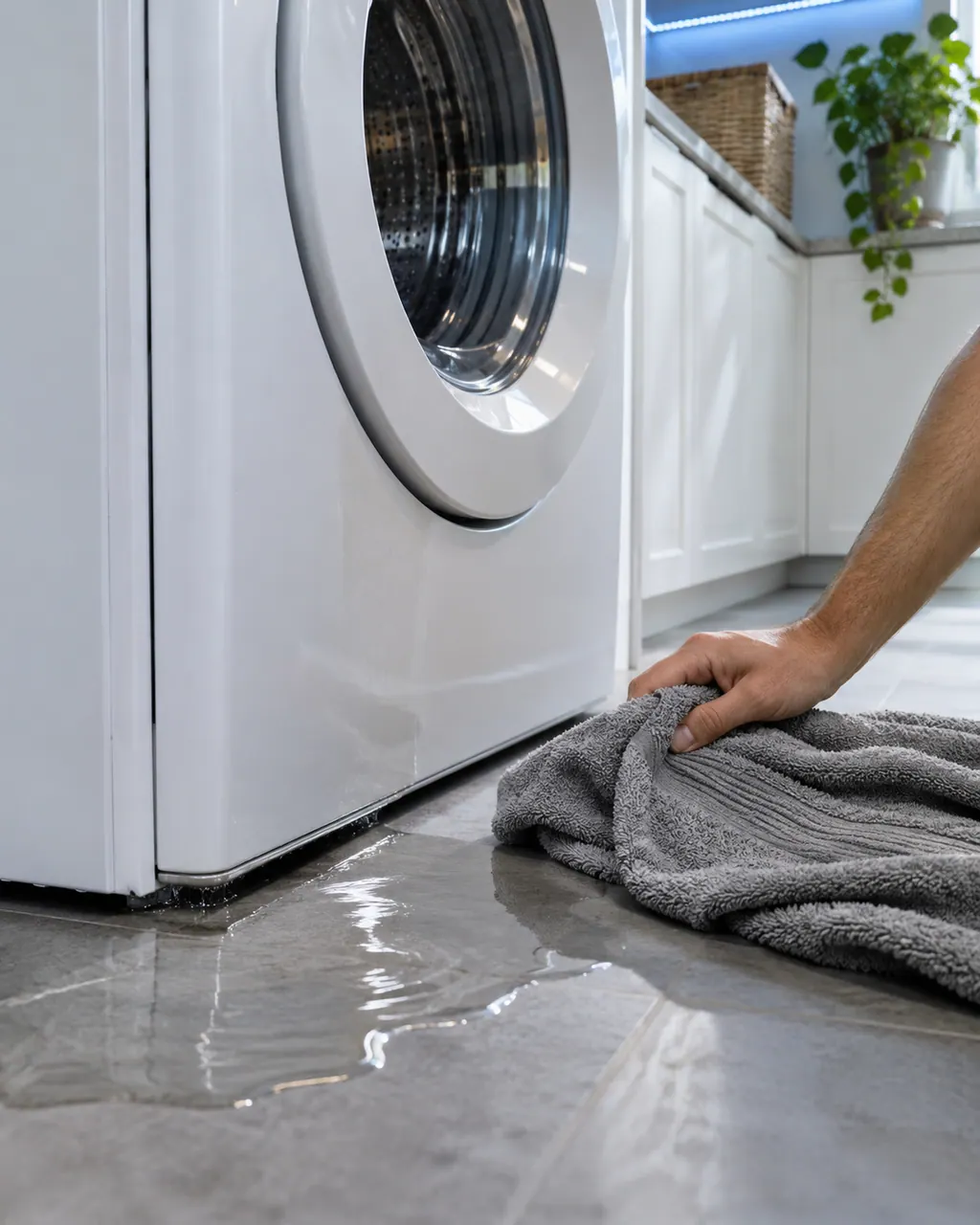
Start with safe observations.
Switch the appliance off and unplug it before any check of your own. Look out for pooled water and jagged debris. Never touch a wet plug or an electrical area, take off a service panel or go past what your model's owner instructions allow.
- 1
Open the door and look
On a front loader, a little water may drip from the door right after you open it. Samsung treats it as a leak only if water escapes while the door is closed.
- 2
Inspect hoses and o-rings
Check both ends of every hose, the rubber, and the o-rings inside the fittings. Replace anything that is damaged.
- 3
Fold back the door gasket
Look for foreign material or damage. Samsung notes that even one strand of hair or a bit of thread can cause a leak.
- 4
Check the drain hose
It should sit 6 to 8 inches into the drain pipe, be secured, and run without kinks. Samsung's height range is 18 to 96 inches, or 24 to 35 inches into a sink.
- 5
Clean the pump filter
Front loaders with a pump filter should have it cleaned about once a month or every 40 washes. Drain the water into a container first.
- 6
Cut the detergent and level the washer
Use HE detergent and stay under the MAX line. Run an empty cycle until no suds show. Rock the washer: all four corners should sit firm.
- 7
Run a test cycle
If you fixed a hose, the gasket, soap scum, the drain hose, a dirty pump filter or the leveling, run a cycle such as Rinse & Spin to see whether the leak continues.
Systems a technician may investigate.
Nothing is named as a part until we have tested the washer in place. You see the price and say yes before an order goes in.
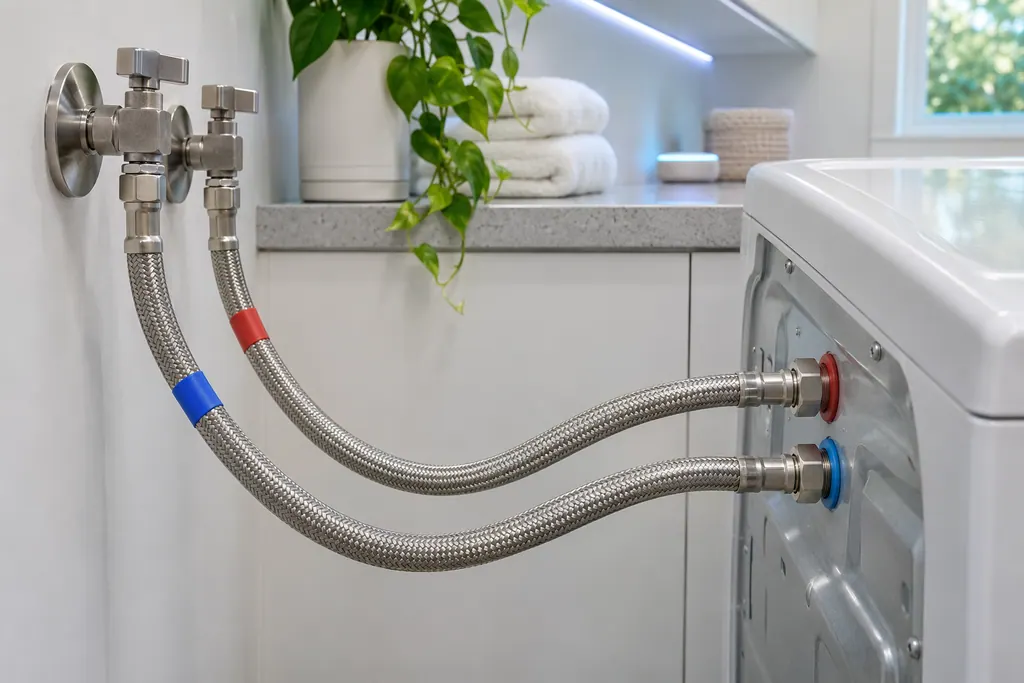
Washer supply hoses
Samsung's washer pages name the supply hoses for the not-filling codes, the water-level or leakage group and the hot/cold error. Hot goes to the hot inlet, cold to the cold inlet, and neither hose may be bent or kinked. If a code stays after that, book a technician.
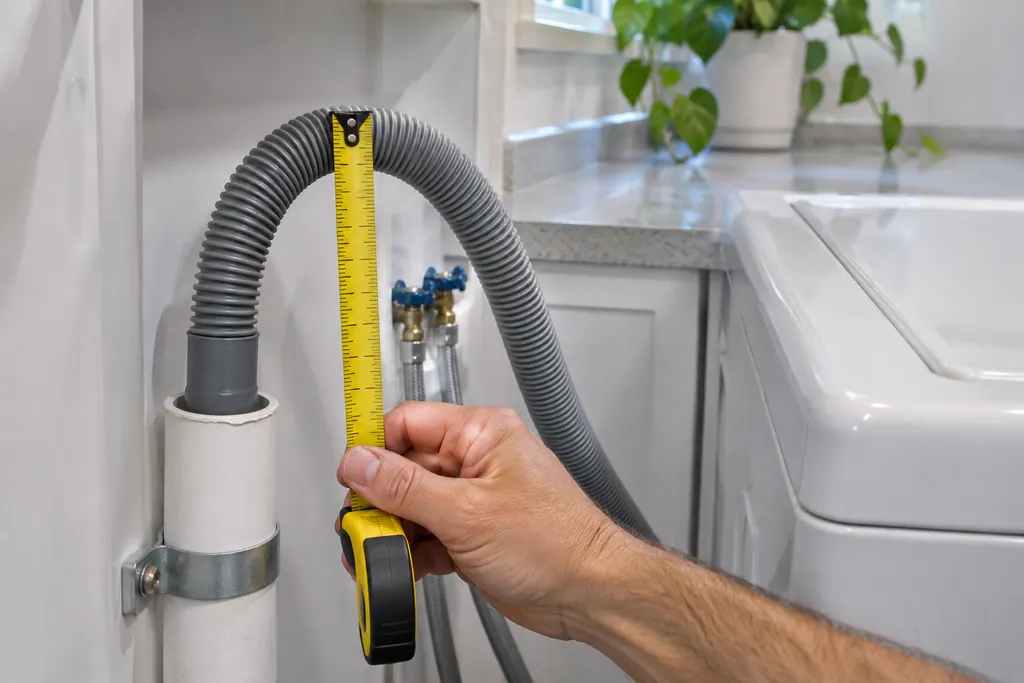
Washer drain hose
The drain hose is the part Samsung's drain guide checks first for the no-drain and overflow codes. It should sit 6 to 8 inches into the standpipe or sink, be secured, and not be kinked. If the code stays after those checks, book a technician.
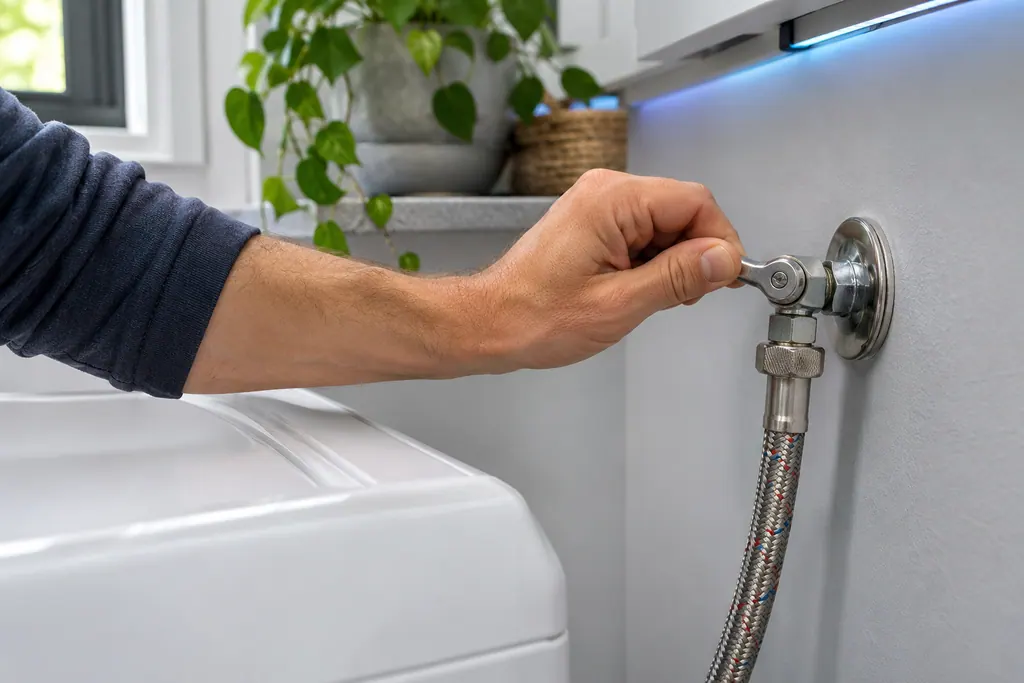
Washer water supply valves
In its not-filling entry Samsung asks that the water supply valves are completely open, along with the hose checks. A half-open valve can leave a washer short of water. If the code returns with the valves fully open, book a technician.
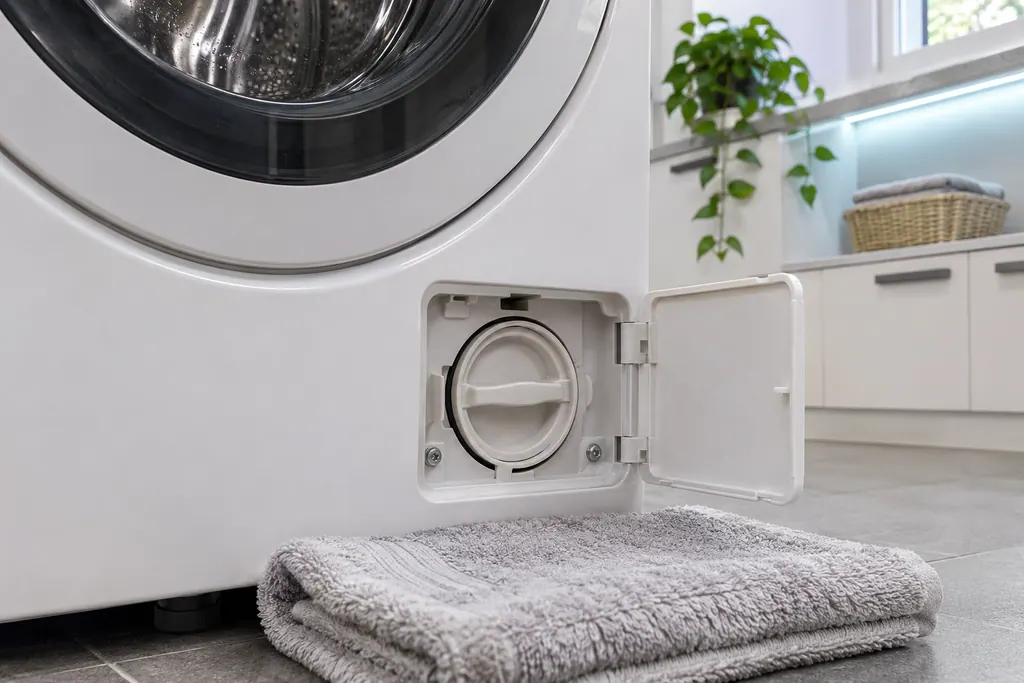
Washer pump filter
The pump filter is the front loader step in Samsung's drain guide, used for the no-drain codes and for overflow. Top loaders have no removable pump filter. Samsung says a clogged debris filter reduces the effectiveness of the draining system.
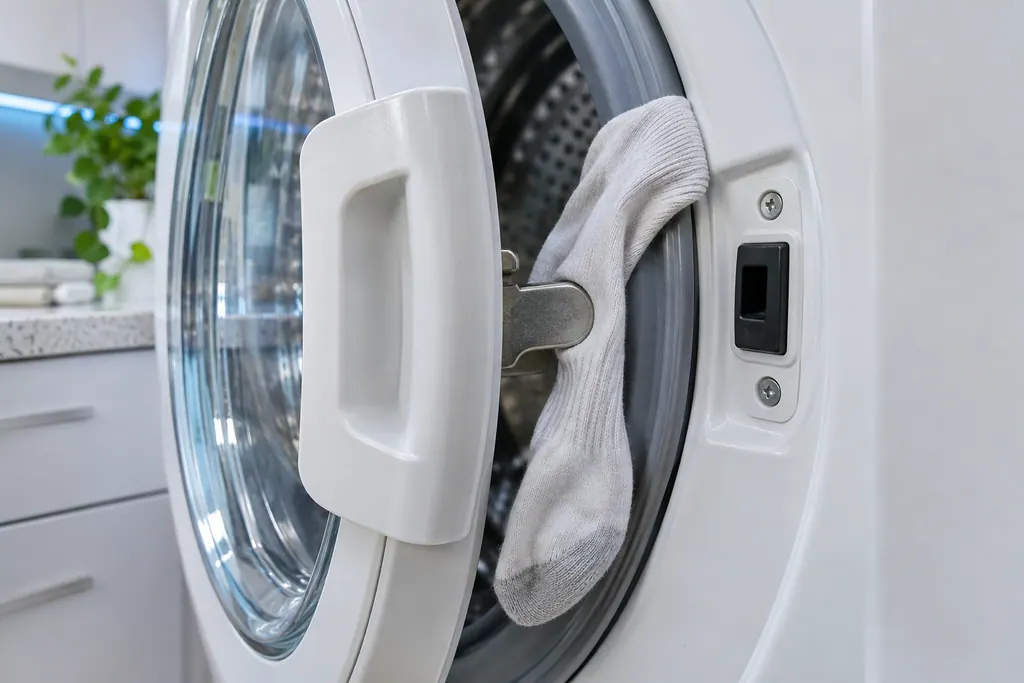
Washer door latch
The door latch is the part Samsung's washer door error group points at: the washer does not detect the door as closed and locked. Samsung wants the latch checked as fixed and the door edge clear of laundry. Damage to the door or latch needs a visit.
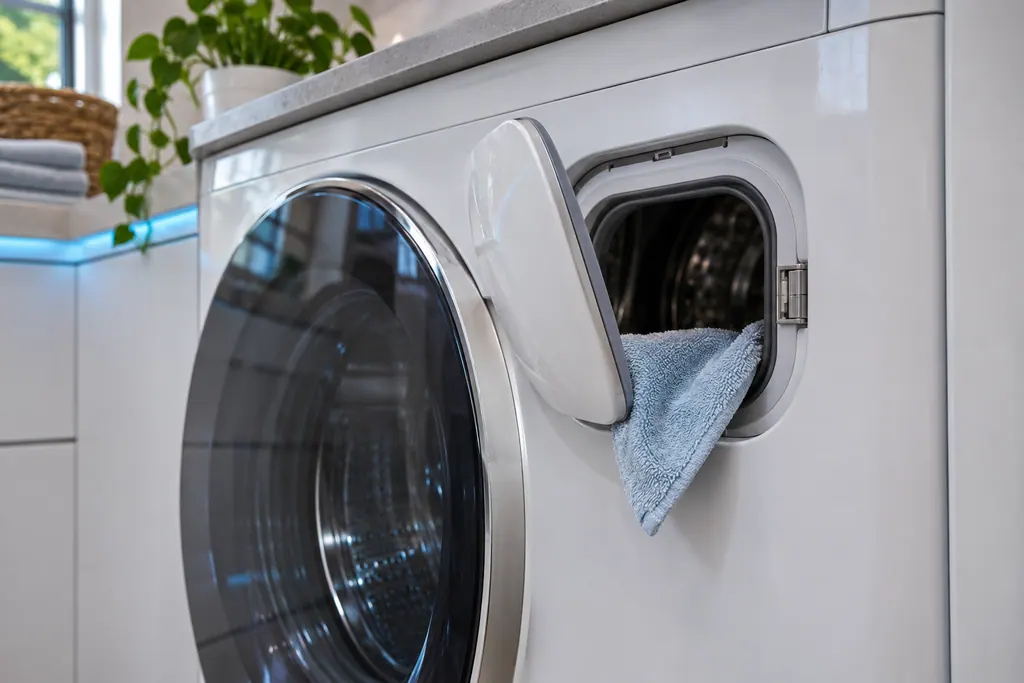
Washer Add Door
Samsung gives the Add Door its own error, ddC or dC3: the Add Door is not detected as closed and locked. Samsung asks you to check that its latch is fixed and that nothing is caught in it. Damage to the Add Door or its latch needs a visit.
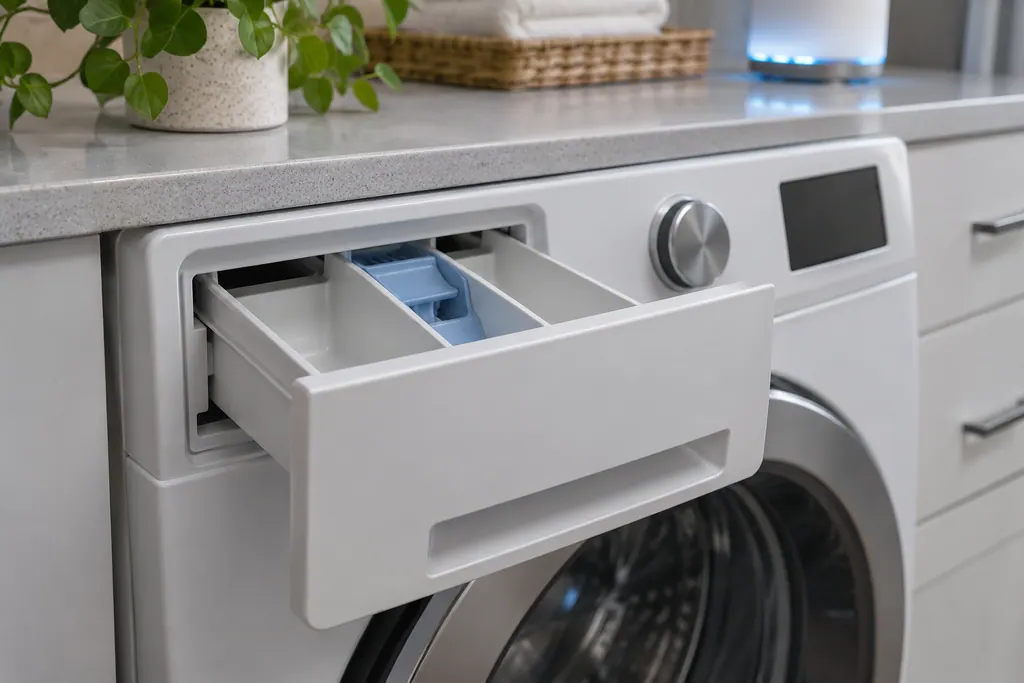
Washer detergent drawer
SDC and 5DC are Samsung's detergent drawer error: the drawer is not completely closed. Samsung says it clicks when fully closed. Push it home until it clicks; if the code lingers, book a technician with us.
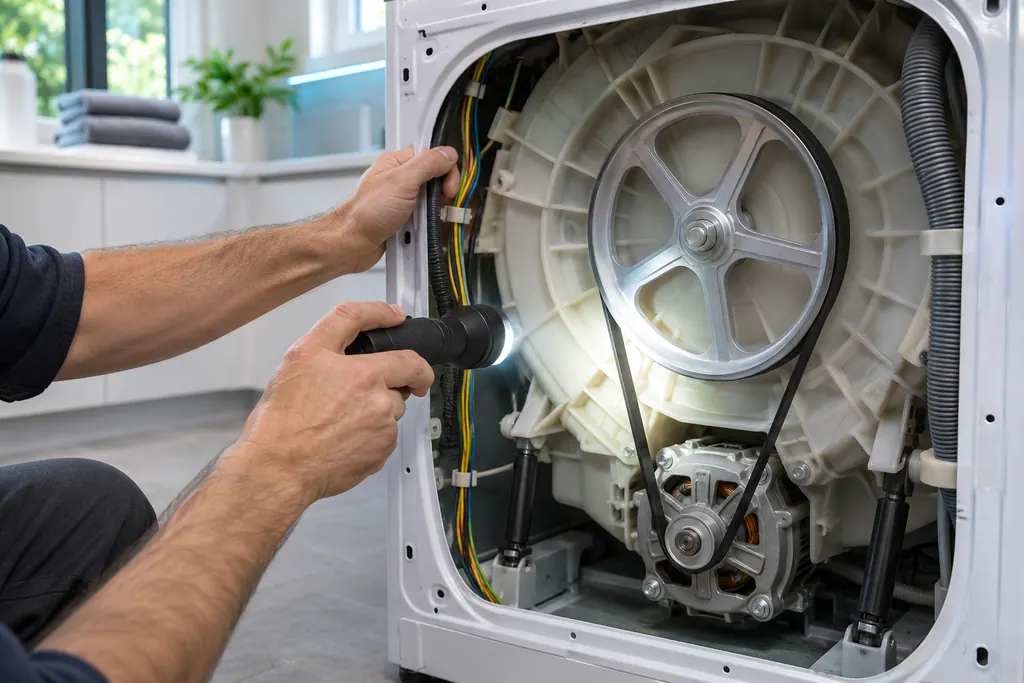
Washer motor
Samsung lists a Motor Error under its washer "All other errors": 3C, E3 and 1 3C, and on some models 3E. The entry has a name and no steps. Power the washer off for 2 to 3 minutes and restart; if it continues, book a technician.
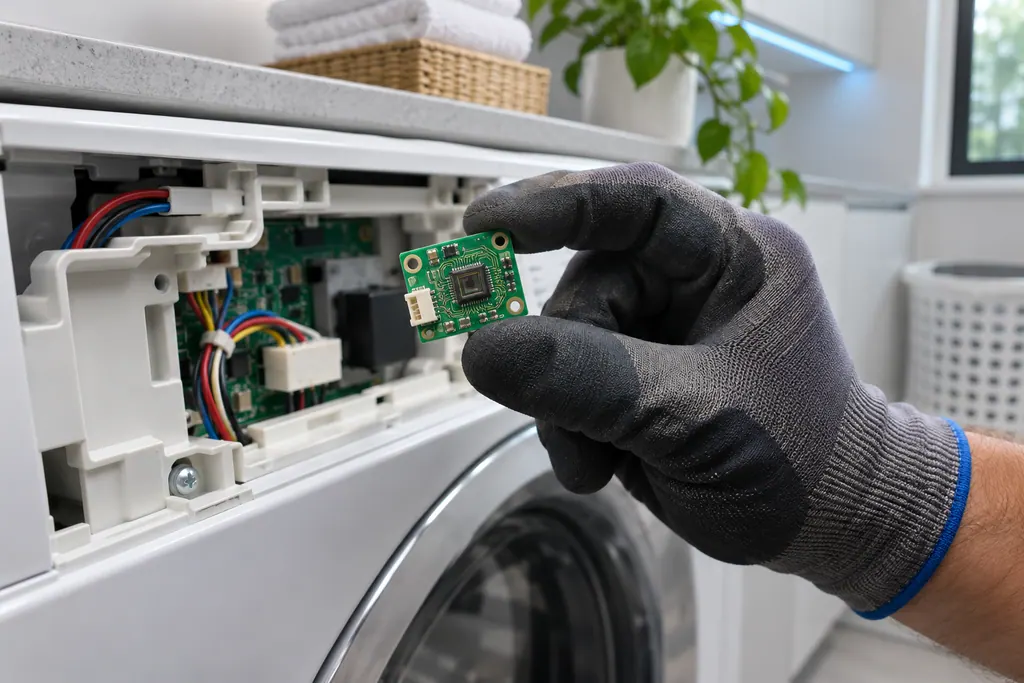
Washer Mems sensor
Samsung lists a Mems Sensor Error among its washer "All other errors": 8E, 8C, BC, BE and their numbered forms. For 8E and BE on some models it calls the same entry a Vibration Sensor Error. The entry gives a name and a restart, not a cause.
If the display adds a code.
Water and drain
LE is listed on Samsung washers as a water level or leakage error: moisture where it does not belong, or a sensor problem. Look for a leak first, then check the hoses and run an empty cycle. Book a technician with us if it persists with no suds.
Water and drain
LC is listed on Samsung washers as a water level or leakage error: moisture where it does not belong, or a sensor problem. Look for a leak first, then check the hoses and run an empty cycle. Book a technician with us if it persists with no suds.
Information
SUd is Samsung's excessive-suds code on a washer: the washer detected over-sudsing and paused to let the suds settle. It continues by itself and needs no service. Samsung ties it to incorrect detergent use.
Read the related care guide.
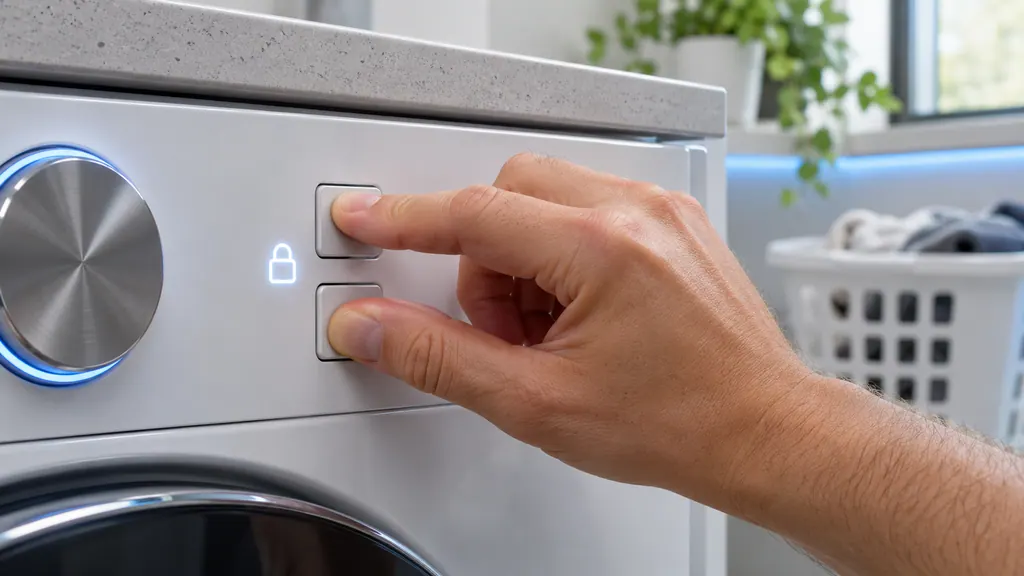
Samsung panel or door will not respond? Check Child Lock.
Child Lock disables the panel buttons on a Samsung washer or dryer except a few, such as Power. To turn it off, press and hold the two Child Lock buttons together until the icon goes out; on models with Temporary off, hold them once so it flashes, then again. Restarting the machine will not clear it. [1][2]
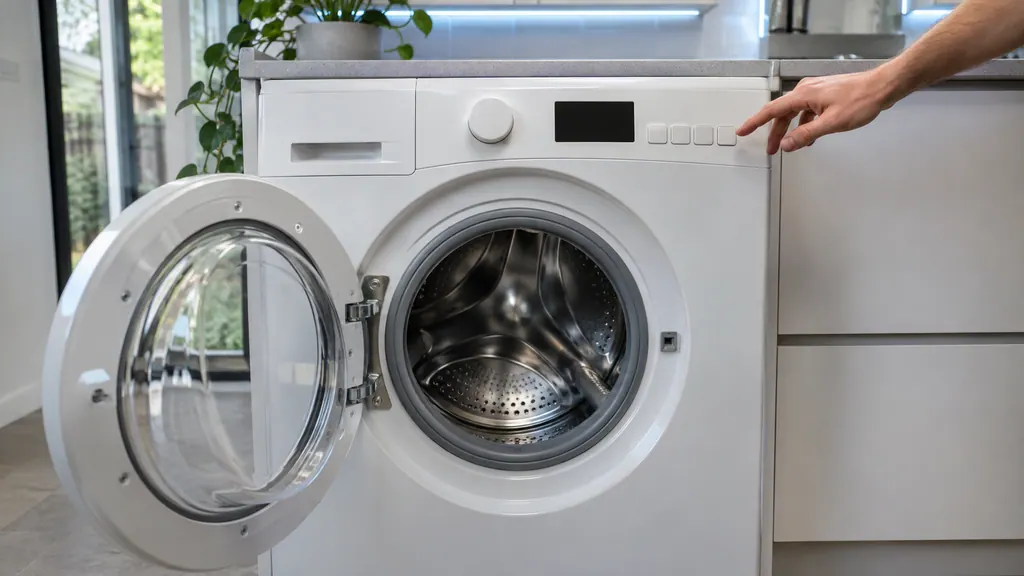
Cb on your Samsung washer display? It is Calibration mode.
Calibration mode recalibrates a Samsung washer's weight detection, which sets the water used per cycle. Run it empty, after installation, after you move or adjust the washer, or when water amounts seem wrong. On many models, hold Temp. and Delay End for 3 seconds to show Cb, then press Start/Pause. [1][2]
When observation becomes a service request.
Leave internal testing to a technician.
Water appears with the door closed after the hoses, gasket, drain hose and pump filter check out.
A hose, o-ring or the door seal is damaged.
The drain hose holder on the back of the washer is missing.
Water drips directly from the detergent drawer after you cut the detergent and ran a cycle.
Water keeps running onto the floor during a cycle.
Arrange a diagnosticSources and model boundaries.
These sources stand behind the Samsung washer leaking advice. Choose the manual that fits your model.
- Samsung washing machine is leaking
Follow the user manual for your exact model. See how we research these pages.
Is a little water at the door after a cycle a leak?
No. Samsung says front loaders can drip a little once the door is open and calls that normal. It counts as a leak only when water comes out while the door is shut.
Can too much detergent make a washer leak?
Yes. Samsung says extra suds from too much or non-HE detergent leave residue that contributes to leaks and leak errors. Run empty cycles without detergent until the suds stop.
What depth suits the drain hose?
Samsung's leak guide says 6 to 8 inches into the drain pipe, secured with a zip tie. Deeper than 8 siphons water. Shallower than 6 can let the hose fall out and spill onto the floor.
What cleaning interval does the pump filter need?
Samsung's interval is about once a month or every 40 washes, whichever comes first. If it is neglected, it can clog and cause draining trouble and leaks.
Samsung codes, symptoms, parts, house calls
From the message to what comes next.
Samsung washer LE error code
LE is listed on Samsung washers as a water level or leakage error: moisture where it does not belong, or a sensor problem. Look for a leak first, then check the hoses and run an empty cycle. Book a technician with us if it persists with no suds.
Samsung washer leaking
Samsung says most washer leaks come from conditions you can correct: a damaged hose or o-ring, debris under the door gasket, a drain hose set too deep or too shallow, a dirty pump filter, too much detergent, or a washer that rests off level. Water dripping from the door after you open it is normal. A leak with the door closed is not.
Washer repair
Book a diagnostic for your exact model, carried out beside the appliance.
Find your metro
Office details, and the access notes to send us.