Start from the symptom
Samsung washer odor and mold.
Samsung sorts washer smells into three: a burning smell on the first couple of cycles, a sulfur or sewage smell from a drain hose pushed too far down, and a mildew smell or visible mold. Mold gets a bleach Self Clean routine. Samsung says that, apart from the burning smell, odors trace back to maintenance rather than a failed part.
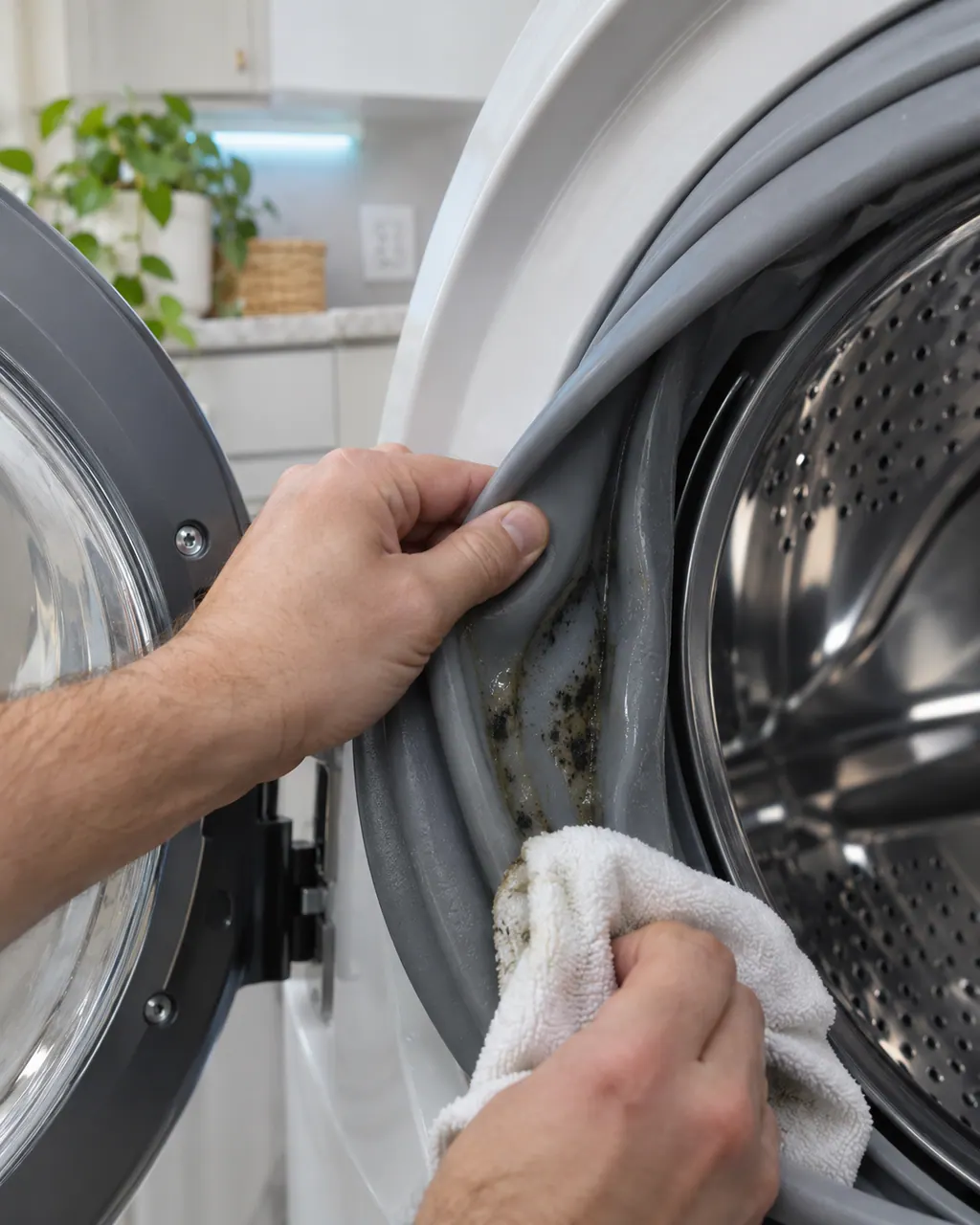
Start with safe observations.
Switch the appliance off and unplug it before any check of your own. Look out for pooled water and jagged debris. Never touch a wet plug or an electrical area, take off a service panel or go past what your model's owner instructions allow.
- 1
Burning smell on a new washer
Samsung says the coating on the motor coils can smell for the first couple of cycles. If it continues after that, it needs a visit.
- 2
Sulfur or sewage smell
Pull the drain hose out, clean its end, and reinsert it no more than 8 inches into the drain or standpipe. Secure it so it stays put.
- 3
Mildew or visible mold: the routine
With an empty tub, run Spin-only, pour liquid chlorine bleach to the max line of the detergent compartment (not the bleach compartment), and start Self Clean right away. Never run it with laundry inside.
- 4
Wipe and rinse afterward
Wipe the tub with paper towels, run Rinse+Spin, and keep the door or lid propped open, along with the drawer, so everything dries.
- 5
Clean the pump filter
On front loaders, a neglected pump filter causes odors.
- 6
Prevent a repeat
Level the washer, avoid overloading, use HE detergent within the MAX line, skip fabric softener, empty the washer promptly and wipe the gasket and drawer dry.
Systems a technician may investigate.
Nothing is named as a part until we have tested the washer in place. You see the price and say yes before an order goes in.
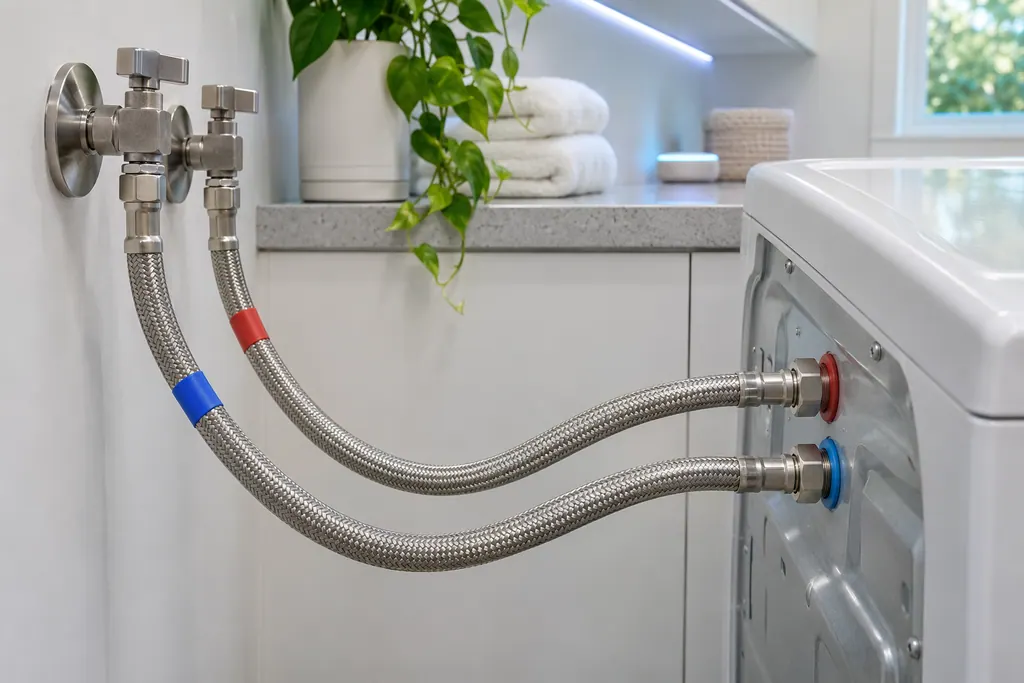
Washer supply hoses
Samsung's washer pages name the supply hoses for the not-filling codes, the water-level or leakage group and the hot/cold error. Hot goes to the hot inlet, cold to the cold inlet, and neither hose may be bent or kinked. If a code stays after that, book a technician.
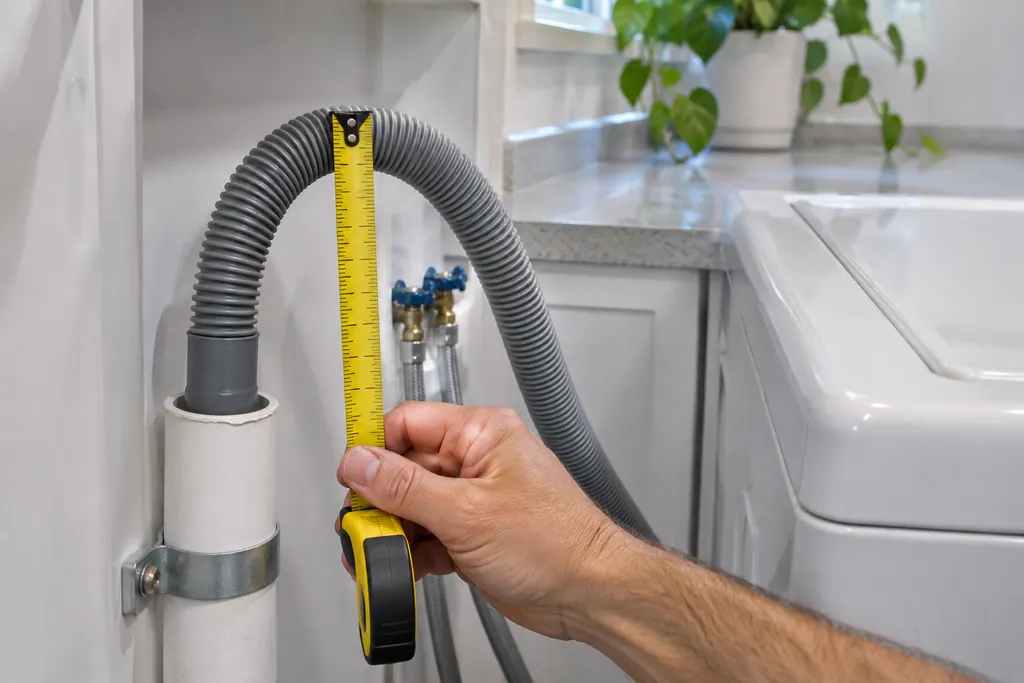
Washer drain hose
The drain hose is the part Samsung's drain guide checks first for the no-drain and overflow codes. It should sit 6 to 8 inches into the standpipe or sink, be secured, and not be kinked. If the code stays after those checks, book a technician.
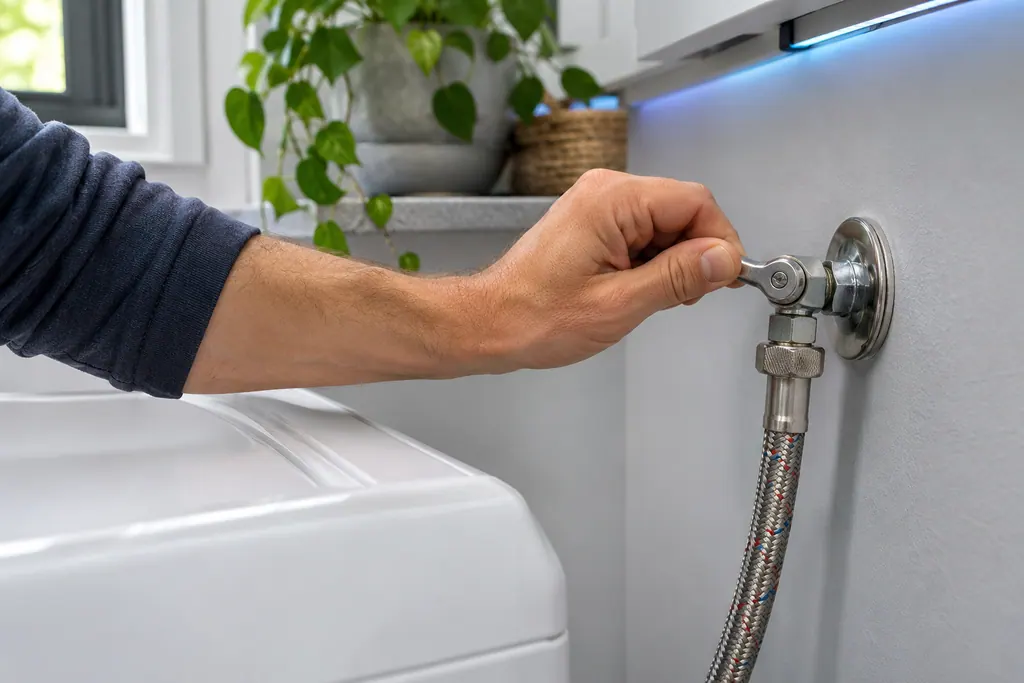
Washer water supply valves
In its not-filling entry Samsung asks that the water supply valves are completely open, along with the hose checks. A half-open valve can leave a washer short of water. If the code returns with the valves fully open, book a technician.
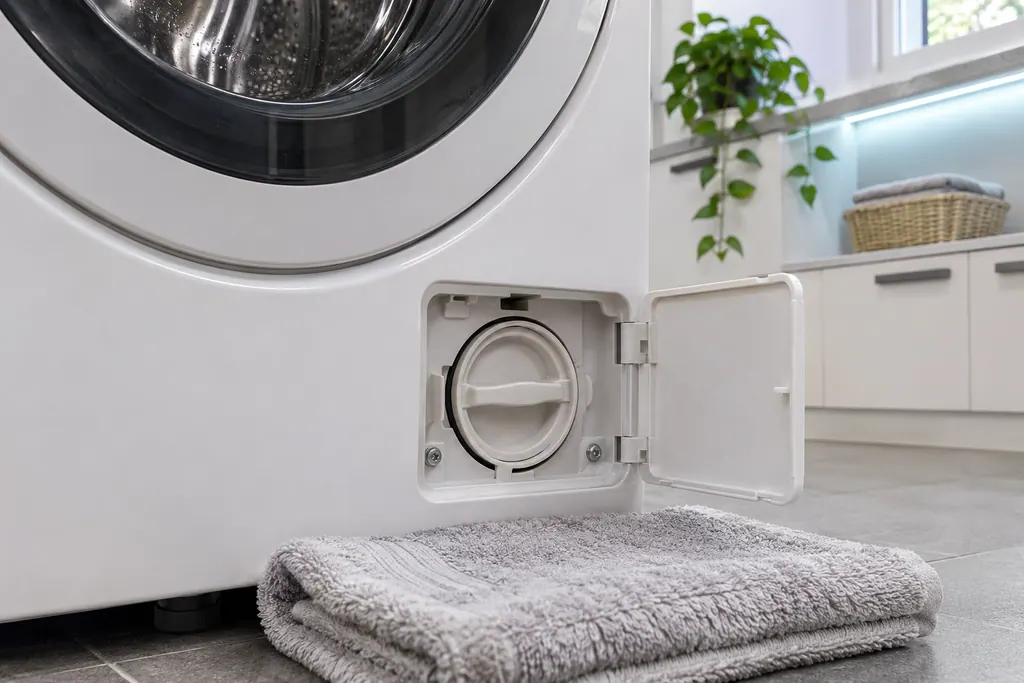
Washer pump filter
The pump filter is the front loader step in Samsung's drain guide, used for the no-drain codes and for overflow. Top loaders have no removable pump filter. Samsung says a clogged debris filter reduces the effectiveness of the draining system.
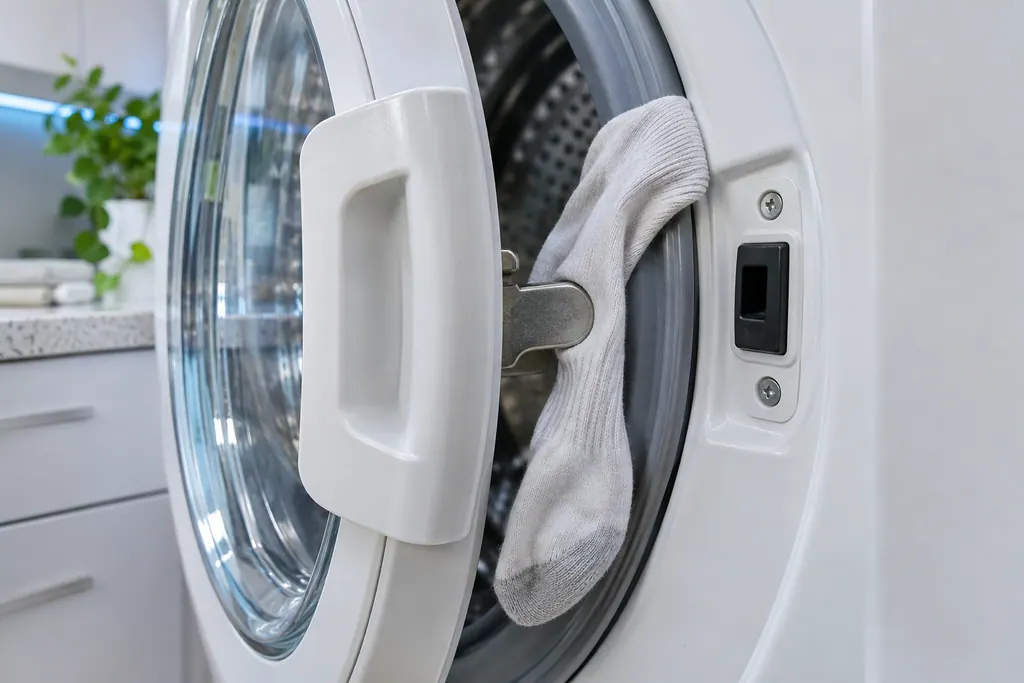
Washer door latch
The door latch is the part Samsung's washer door error group points at: the washer does not detect the door as closed and locked. Samsung wants the latch checked as fixed and the door edge clear of laundry. Damage to the door or latch needs a visit.
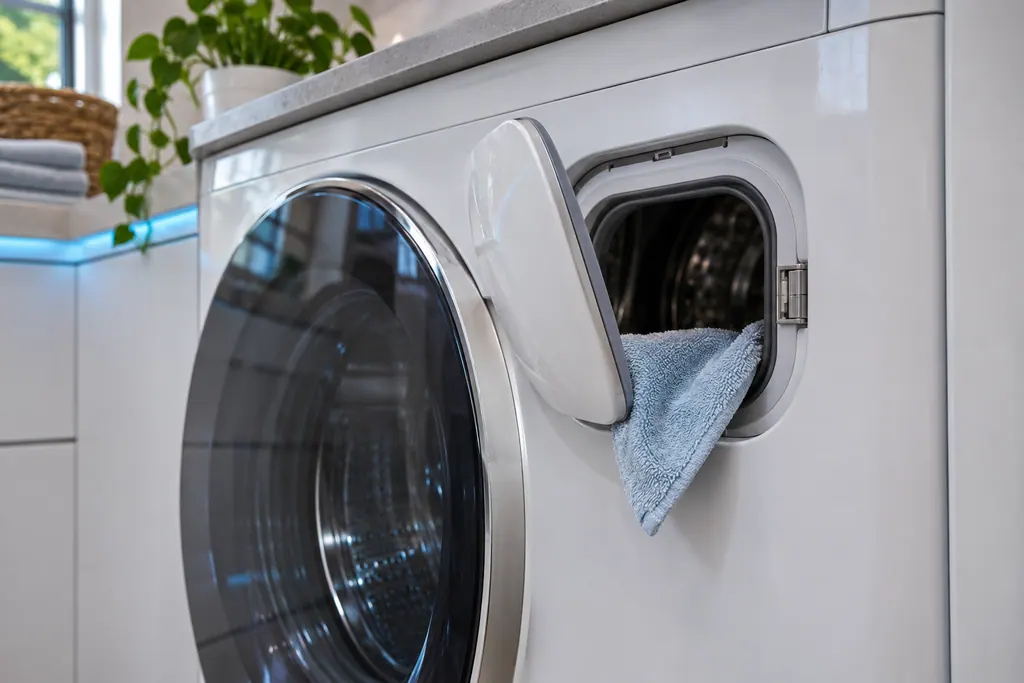
Washer Add Door
Samsung gives the Add Door its own error, ddC or dC3: the Add Door is not detected as closed and locked. Samsung asks you to check that its latch is fixed and that nothing is caught in it. Damage to the Add Door or its latch needs a visit.
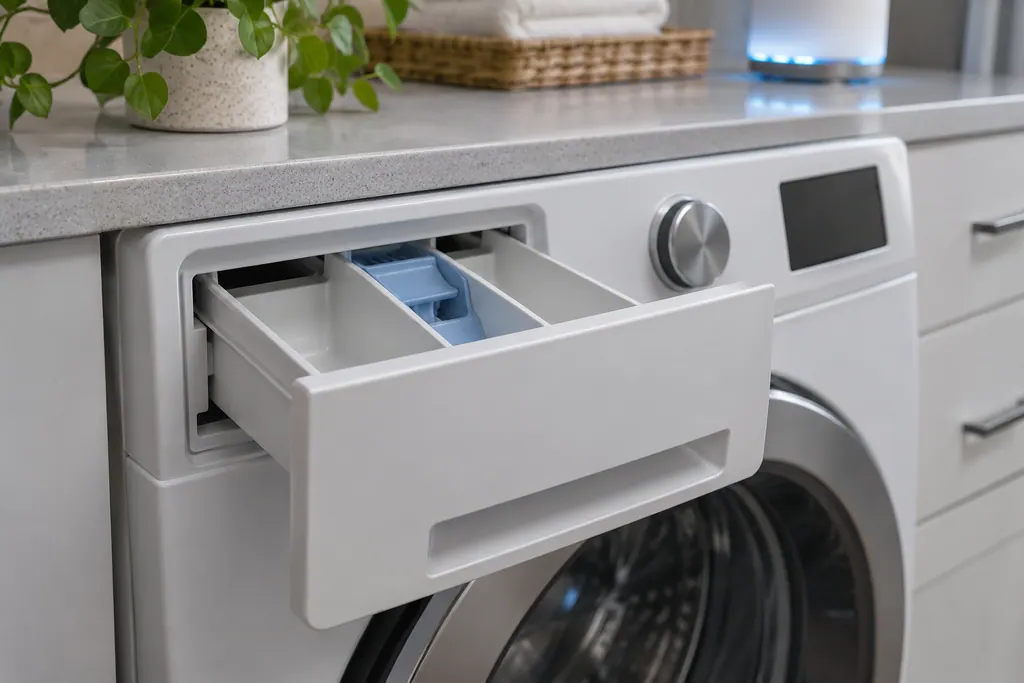
Washer detergent drawer
SDC and 5DC are Samsung's detergent drawer error: the drawer is not completely closed. Samsung says it clicks when fully closed. Push it home until it clicks; if the code lingers, book a technician with us.
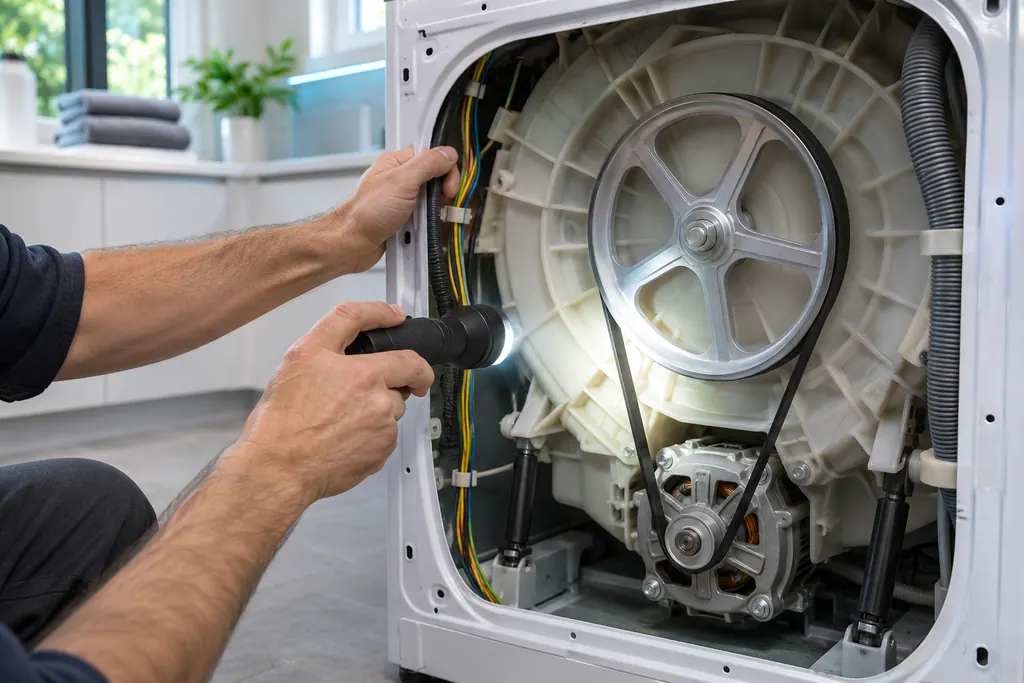
Washer motor
Samsung lists a Motor Error under its washer "All other errors": 3C, E3 and 1 3C, and on some models 3E. The entry has a name and no steps. Power the washer off for 2 to 3 minutes and restart; if it continues, book a technician.
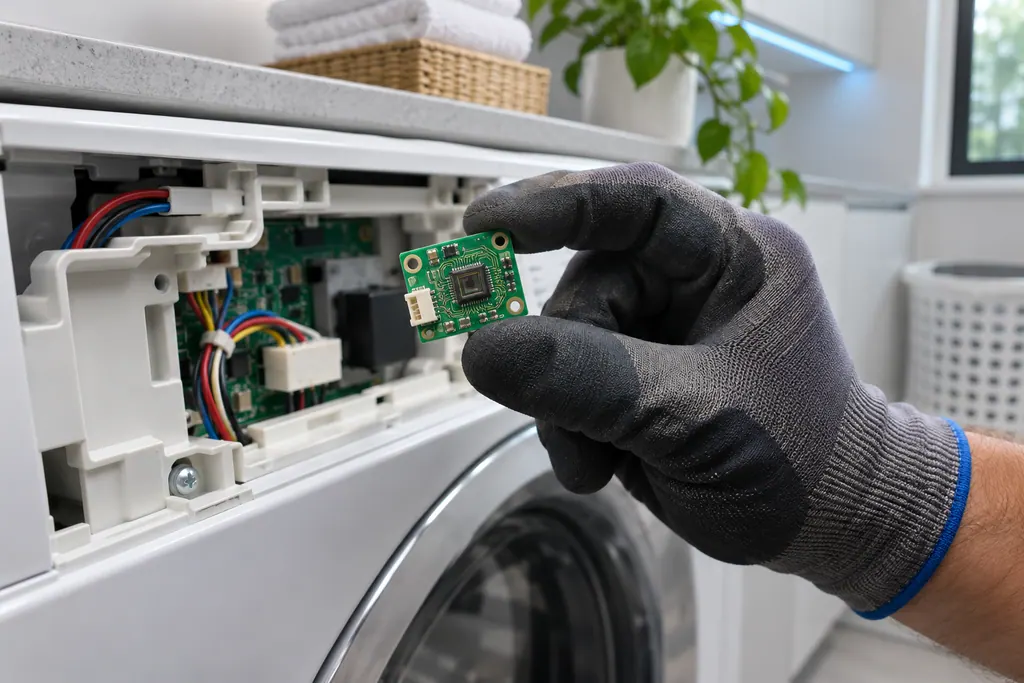
Washer Mems sensor
Samsung lists a Mems Sensor Error among its washer "All other errors": 8E, 8C, BC, BE and their numbered forms. For 8E and BE on some models it calls the same entry a Vibration Sensor Error. The entry gives a name and a restart, not a cause.
If the display adds a code.
Read the related care guide.
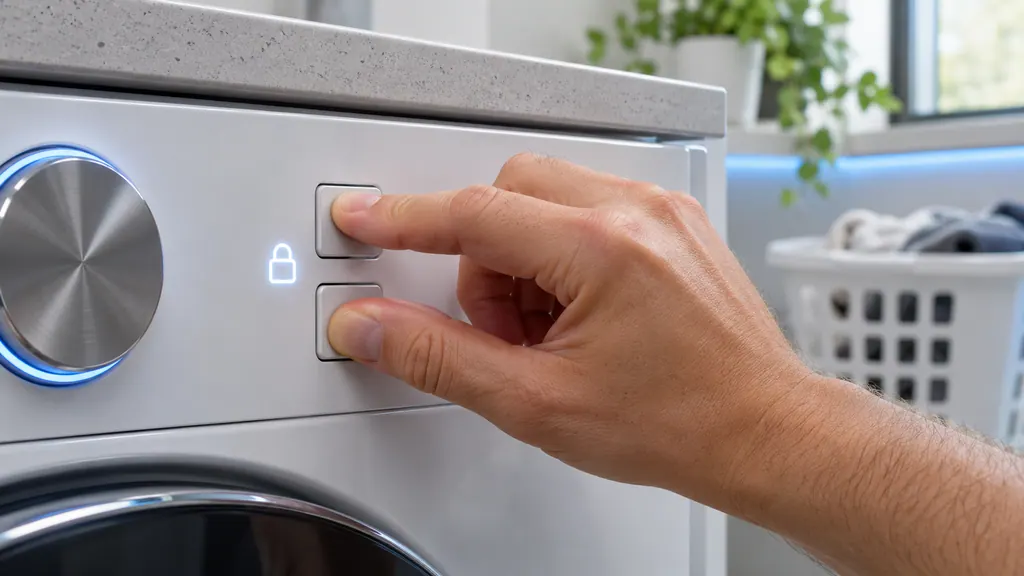
Samsung panel or door will not respond? Check Child Lock.
Child Lock disables the panel buttons on a Samsung washer or dryer except a few, such as Power. To turn it off, press and hold the two Child Lock buttons together until the icon goes out; on models with Temporary off, hold them once so it flashes, then again. Restarting the machine will not clear it. [1][2]
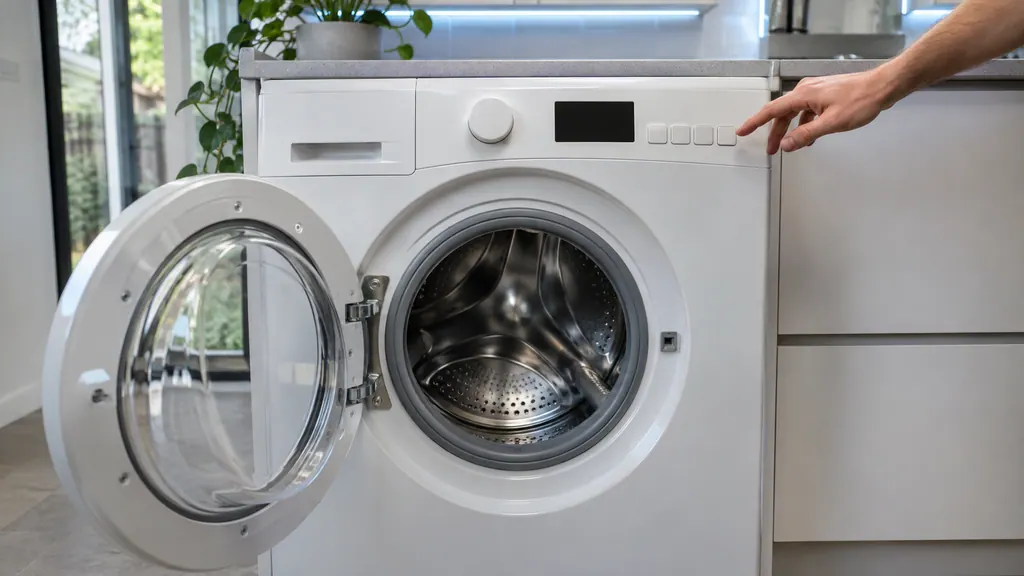
Cb on your Samsung washer display? It is Calibration mode.
Calibration mode recalibrates a Samsung washer's weight detection, which sets the water used per cycle. Run it empty, after installation, after you move or adjust the washer, or when water amounts seem wrong. On many models, hold Temp. and Delay End for 3 seconds to show Cb, then press Start/Pause. [1][2]
When observation becomes a service request.
Leave internal testing to a technician.
The smell or mold returns after several rounds of the bleach routine.
A burning smell continues after the first two cycles.
The drain hose holder is missing.
The smell comes with visible smoke, so stop the washer and unplug it.
Arrange a diagnosticSources and model boundaries.
These sources stand behind the Samsung washer odor and mold advice. Choose the manual that fits your model.
- Samsung washing machine or laundry smells bad
- Samsung washing machine has a mildew smell or visible mold
Follow the user manual for your exact model. See how we research these pages.
Why does my Samsung washer smell like sewage?
Samsung attributes a sulfur or sewage smell to a drain hose inserted too far, which lets drained water siphon back. Reinsert it no deeper than 8 inches and secure it.
Is a burning smell on a new washer normal?
Samsung says the insulating coating on the motor coils can smell during the first couple of cycles and then stops. A burning smell after that needs a technician visit.
Can I put bleach in the bleach compartment for the mold routine?
No. Samsung says to pour liquid chlorine bleach into the detergent compartment up to the max line, then start Self Clean at once. Do not leave bleach sitting in the washer.
Samsung's odor page gives two hose depths. Which one applies?
One section says no more than 8 inches, the prevention list says no more than 6, and Samsung's leak guide says 6 to 8. Staying within 6 to 8 inches and securing the hose satisfies all three.
Samsung codes, symptoms, parts, house calls
From the message to what comes next.
Self Clean
On a Samsung washer, blinking Self Clean lights are read as: the Self Clean light is reminding you to clean the tub; it is not an error. Run a Self Clean cycle when convenient. Book a technician with us if the same lights return and the washer stops working normally.
Samsung washer leaking
Samsung says most washer leaks come from conditions you can correct: a damaged hose or o-ring, debris under the door gasket, a drain hose set too deep or too shallow, a dirty pump filter, too much detergent, or a washer that rests off level. Water dripping from the door after you open it is normal. A leak with the door closed is not.
Washer repair
Book a diagnostic for your exact model, carried out beside the appliance.
Find your metro
Office details, and the access notes to send us.