On this page
- Other than a burning smell, odors come from how the washer is maintained. 1
- Self Clean is for about every 30 to 40 loads and never with laundry in the tub. 1
- Detergent over the MAX line and fabric softener leave residue that smells. 1
- Keep the drain hose no deeper than 6 inches in the standpipe. 1
- Leave the door and detergent drawer open to dry. 1
Why does my Samsung washer smell bad?#
Samsung's article says that, apart from a burning smell, the washer cannot make an odor on its own. The smell comes from how it is maintained: detergent buildup, an unlevel machine, a drain hose pushed too far down the drain, or wet clothes left inside. Service is usually not needed. 1
That is good news, because most of the causes are in your hands. The article groups odors by type, and each type points to a different cause.
| Smell | Cause in Samsung's article | What to do |
|---|---|---|
| Burning, first two cycles | Insulating coating on the motor coils | It goes away; if it returns after two cycles, request service 1 |
| Sulfur or sewage | Drain hose inserted too far, water siphoning back | Pull it out, clean the end, reinsert no more than the stated depth 1 |
| Mildew or visible mold | Residue and moisture | Bleach and Self Clean procedure below 1 |
| General mustiness | Detergent, softener, wet laundry, unlevel washer | The daily habits below 1 |
How deep should the drain hose go?#
Shallow. The article warns that a hose pushed too far down the drain or standpipe lets drained water siphon back into the washer, which causes a sulfur or sewage smell. One section says no more than eight inches, another says no more than six, so aim for six or less and secure the hose so it cannot slip down. 1
The two numbers are Samsung's own, on the same page. The lower figure is the safe one. Do not remove the screw on the back of the washer that holds the drain hose against the cabinet. If the screw has been removed, put it and the holder back with any screw that fits. If the holder is missing, service is required. 1 The article adds that many other installation requirements apply, listed in your manual. 1
How do I get rid of mildew or visible mold?#
Spin out the tub, add liquid chlorine bleach to the detergent compartment, run Self Clean at once, wipe the tub, run Rinse+Spin and let the washer dry. The article says this procedure is only for a mildew smell or visible mold, not for routine maintenance. 1
- 1
- 2
- 3
- 4
- 5
- 6
- 7
Never run Self Clean with laundry in the tub. It can damage the washer and the laundry. 1 If the smell or mold remains after several attempts, Samsung says to request service, and that is where we can help. Our washer repair page explains the visit.
Which daily habits prevent odors?#
Samsung's list: level the washer, keep the drain hose shallow, size the load right, measure detergent, avoid softener, remove clothes promptly and dry the washer after each use. Each habit stops moisture or residue from sitting in the machine. 1
- Level the washer. Water and additives do not drain properly when it is unlevel, and the residue causes odors over time. Check it periodically. 1
- Size the load. An overloaded washer leaves excess moisture. An underloaded one often leaves excess detergent residue. 1
- Measure detergent. Stay under the MAX line and the maker's amount. If that amount would pass the line, use a more concentrated detergent or a smaller load. Non-HE detergent also builds residue. 1
- Skip softener. It builds up. Use dryer sheets in the dryer or a little distilled white vinegar in the washer. 1
- Remove clothes promptly. Wet laundry left after a cycle is one of the most common sources of odor and can grow mold on the clothes. 1
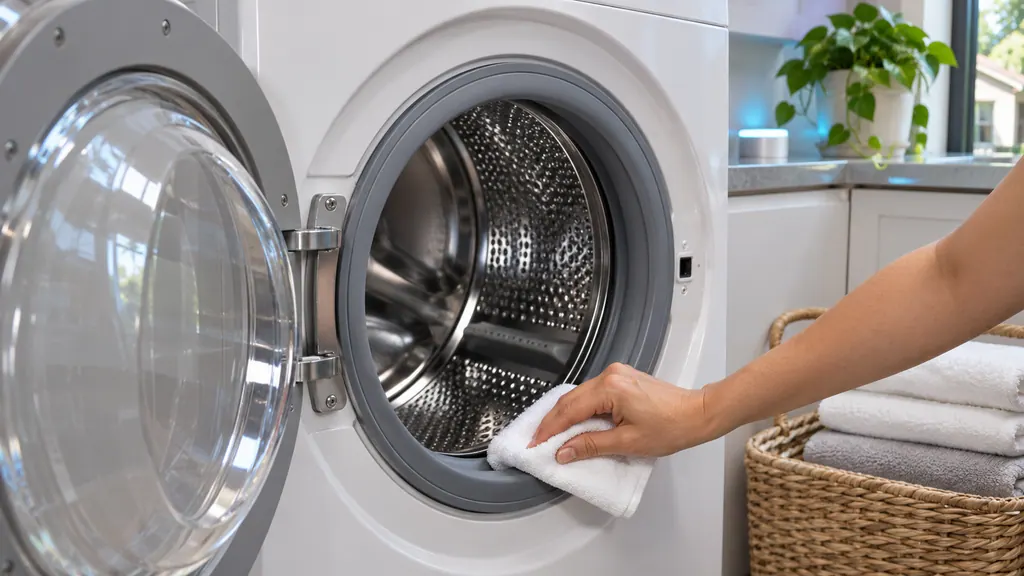
- Dry the washer. Wipe the detergent drawer, tub and door seal, especially the rubber seal on front loaders, and leave the door open. 1
Our guide on too many suds covers dosing in more depth.
How do I find out if there is detergent residue?#
Run an empty cycle with no additives. If suds appear, residue is in the washer. Keep running empty cycles until the suds stop, which reduces or removes the odor and improves performance. 1
Powdered detergent is less likely to cause buildup, the article says, and the drawer itself needs an occasional thorough cleaning, not just a wipe. How often depends on the amount of buildup. 1 The detergent drawer entry describes the part.
Which cleaning cycles should I use?#
Self Clean, Self Clean+ and Pure Cycle keep the washer clean. Run one about monthly, or every 30 to 40 loads. Front loaders take up to four hours, top loaders about one hour. 1
A flashing indicator reminds you when it is time. The Sanitize cycle uses very hot water and accepts up to 6 cups of white vinegar or bleach in the tub. 1
Multiple cycles may be needed for stubborn odors. 1 A third-party washing machine cleaner is also an option; follow its directions. 1 The pump filter on front loaders needs regular cleaning too, because an unclean filter causes odors. See the pump filter entry. 1
Where does the smell hide?#
Four places trap moisture and residue, according to the article: the detergent drawer, the tub, the door seal on front loaders, and the pump filter on front loaders. The first three need a wipe with a dry cloth after every use. 1
The drawer needs a deeper clean from time to time, because detergent builds up in it, and the pump filter needs regular cleaning because a dirty one causes odors. If you wipe the seal and find black spots or slime in the fold, treat it as mold and use the bleach procedure above. 1 Look under the lip of the seal too; moisture sits there longest.
What should I never do?#
Never run Self Clean with anything in the tub, since that can damage the washer and the contents. Never pour the bleach into the bleach compartment for the mold procedure; it goes in the detergent compartment. Never leave bleach sitting in the washer. 1
Do not remove the screw that holds the drain hose against the back of the washer. Do not go over the MAX line in the detergent drawer. And do not use fabric softener to freshen the washer; it adds to the residue. 1
One more point from the article: odor can transfer to clothes that sit in the washer. In extreme cases mold or bacteria can grow on the clothing itself. 1
When should I book a technician?#
Book a visit if a burning smell continues after the first two cycles, if the smell or mold stays after several cleaning attempts, if the drain hose holder is missing, or if water backs up from the drain even with the washer level and clean. 1
We are an independent repair company, not part of Samsung. A washer under Samsung's own warranty is repaired through the manufacturer. Otherwise book a visit. The technician agrees the price with you before any work starts, and the exact cost is confirmed after the on-site diagnostic. See also the page on washer odor.
Before the visit, note which kind of smell you have, whether the washer is level, how deep the drain hose sits, which detergent you use and how many Self Clean cycles you have already run. That gives the technician a clear starting point.
Sources#
- Samsung washing machine or laundry smells badSamsung Electronics America (official US support article, samsung.com/us) · Page meta date 2026-05-05; fetched 12.11.2026 · Sections: Washing machine has a mildew smell or visible mold; Prevent mold, mildew, and smells in the washer