Inside the appliance
Washer water level sensor. In plain English.
On a Samsung washer, the water level sensor is named in one error entry: 1E, LE, 1C, LC, LC1, 1 1C and 1 LC, "Water level or leakage error". Samsung says moisture is detected where it does not belong, or the sensor itself has an issue. Look for a leak first, then check the hoses.
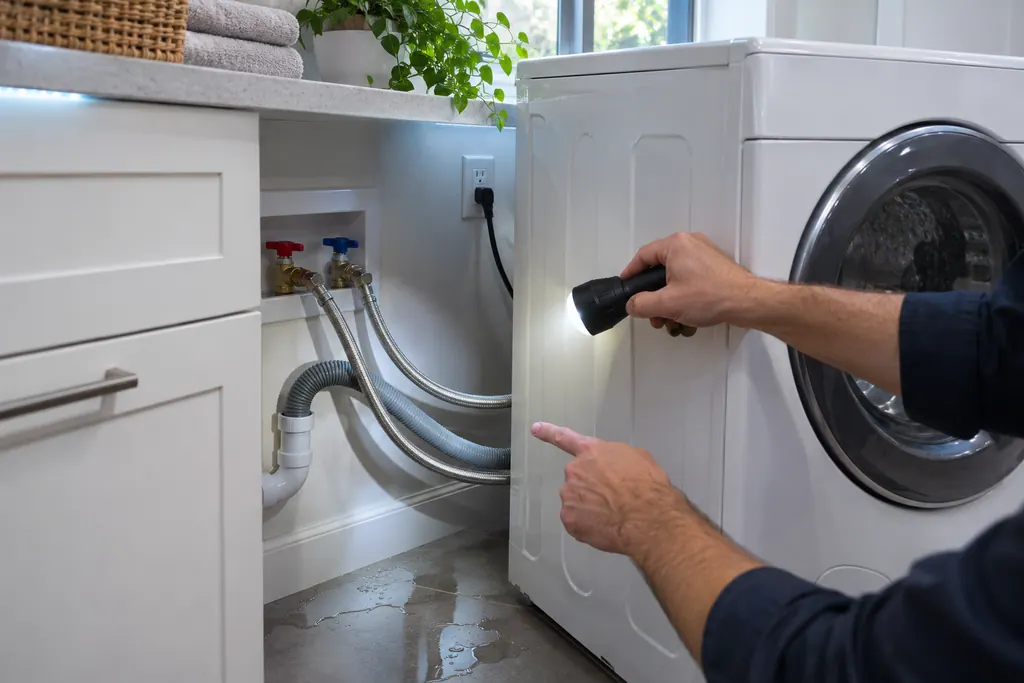
Where it fits.
Washer water level sensor in the appliance
Samsung's article does not give the sensor's position.
The picture shows a typical example of this component. It does not tell you which replacement fits your model.
What shifts once this system needs attention.
Washer water level sensor problems can arrive with weaker performance or a code that keeps coming back. A component is tested before anyone decides it is to blame.
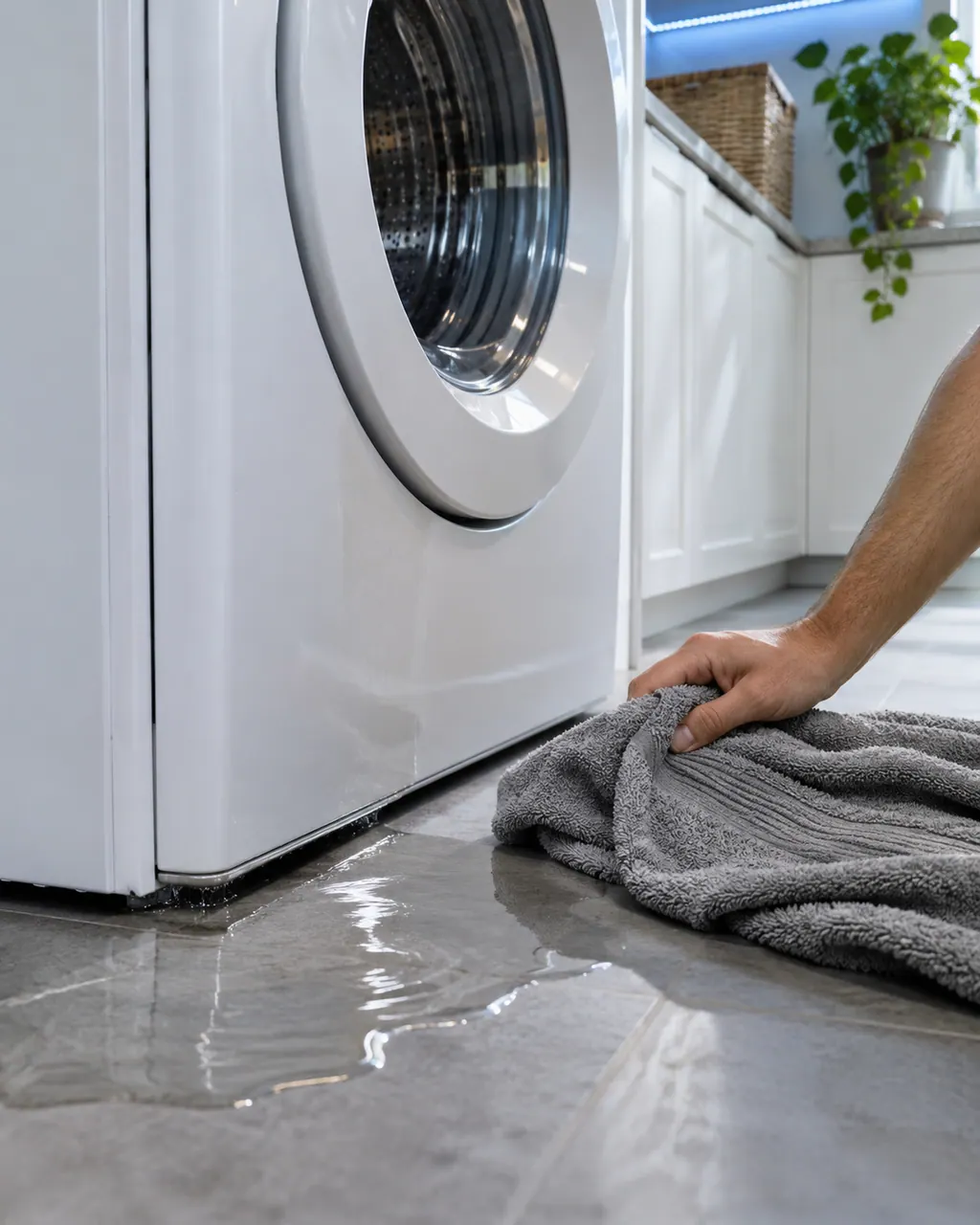
Samsung washer leaking
Samsung says most washer leaks come from conditions you can correct: a damaged hose or o-ring, debris under the door gasket, a drain hose set too deep or too shallow, a dirty pump filter, too much detergent, or a washer that rests off level. Water dripping from the door after you open it is normal. A leak with the door closed is not.
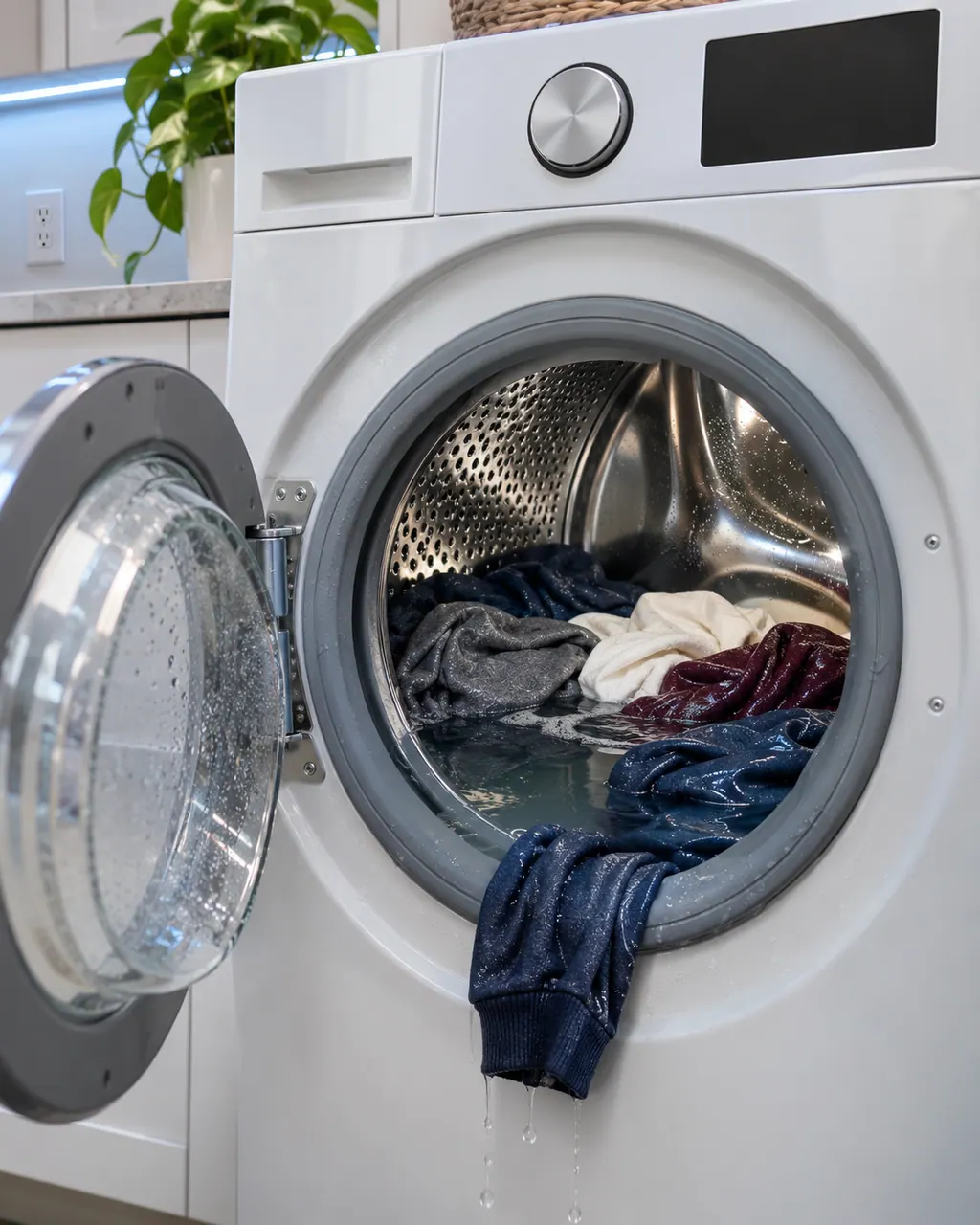
Samsung washer not spinning
No spin at all comes from either a drain problem or a motor problem. Samsung says the washer tries to drain before it spins, so a clogged pump filter or a badly set drain hose can stop the spin before it starts. After clearing the drain side, Samsung suggests Calibration mode. If the tub still does not turn, the washer needs service.
Owner care, within the model instructions.
Switch the appliance off and unplug it before any check of your own. Look out for pooled water and jagged debris. Never touch a wet plug or an electrical area, take off a service panel or go past what your model's owner instructions allow.
- 1
Look for a leak
Samsung says some leaks are too small to notice. Check the floor, the hose connections and the back of the washer. Fixing a leak clears the error.
- 2
Straighten the hoses
Make sure the supply hoses and the drain hose, both at the rear, are free of kinks.
- 3
Leave the hose screw alone
Do not remove the screw on the back that keeps the drain hose against the cabinet. If it is gone, refit it and its holder with any screw that fits. A missing holder needs service.
- 4
Run an empty cycle
Run a cycle with no detergent or softener. Suds mean too much detergent or a non-HE detergent. Repeat empty cycles until the suds stop, then see if the code returns.
Cleaning or replacement?
Leave internal testing to a technician.
No suds appear in the empty cycle and the code still shows.
The drain hose holder is missing.
You find no leak and the code returns on every cycle.
Arrange a diagnosticSee the neighboring components.
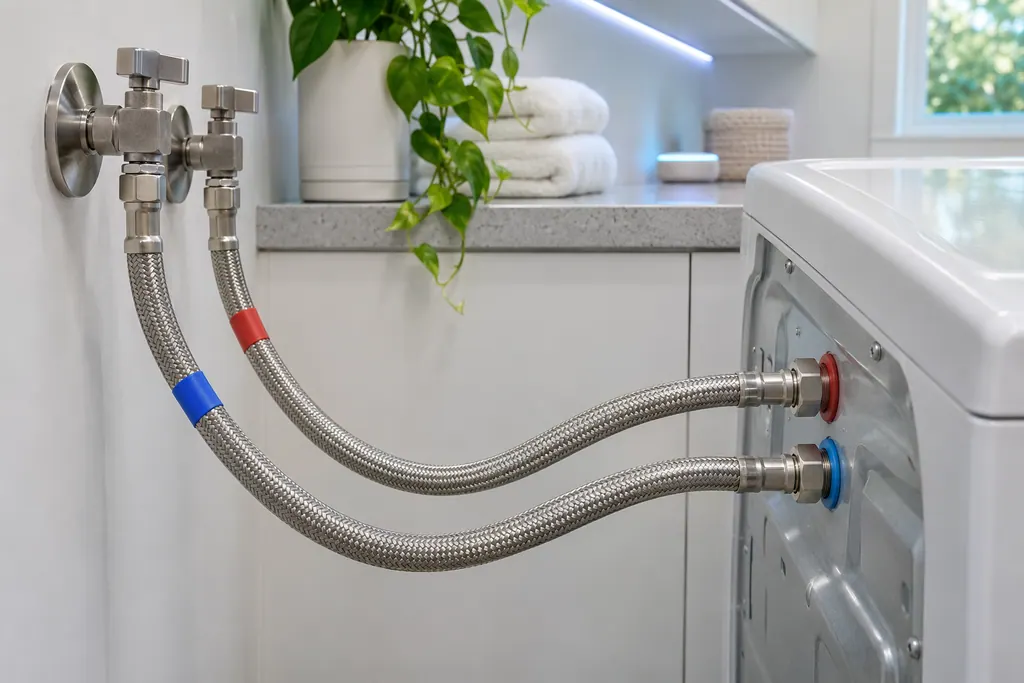
Washer supply hoses
Samsung's washer pages name the supply hoses for the not-filling codes, the water-level or leakage group and the hot/cold error. Hot goes to the hot inlet, cold to the cold inlet, and neither hose may be bent or kinked. If a code stays after that, book a technician.
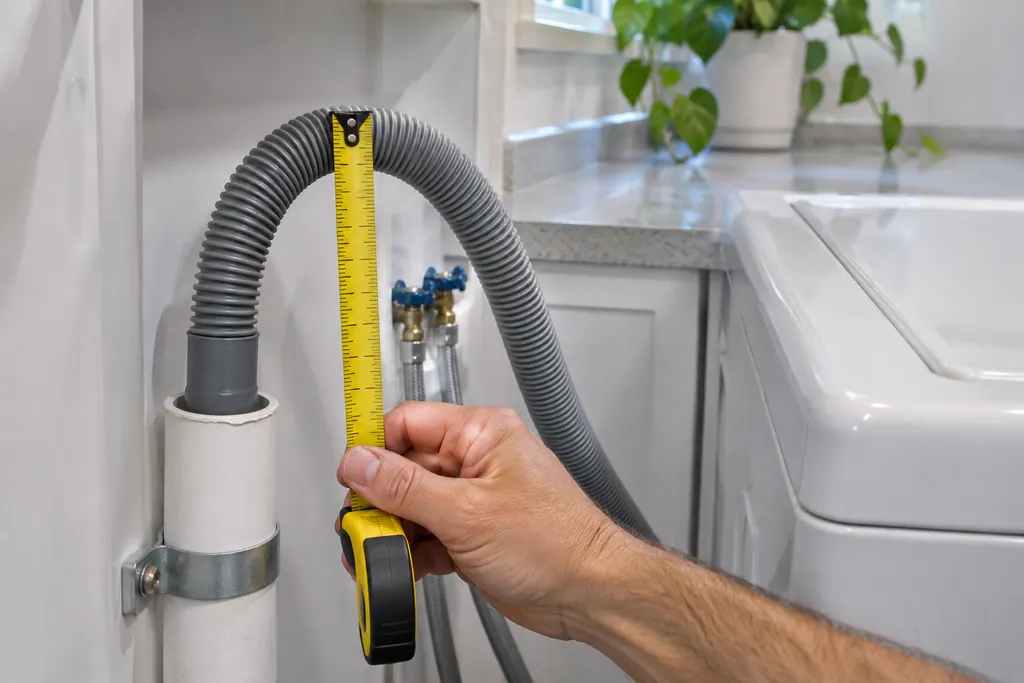
Washer drain hose
The drain hose is the part Samsung's drain guide checks first for the no-drain and overflow codes. It should sit 6 to 8 inches into the standpipe or sink, be secured, and not be kinked. If the code stays after those checks, book a technician.
Sources and model boundaries.
These sources stand behind the Washer water level sensor advice. Choose the manual that fits your model.
- Samsung washing machine information and error codes
Follow the user manual for your exact model. See how we research these pages.
Which codes point to the water level sensor?
Samsung groups 1E, LE, 1C, LC, LC1, 1 1C and 1 LC as a water level or leakage error. The entry covers a leak or the sensor itself.
Does the code always mean a leak?
No. Samsung words it as moisture where it does not belong, or an issue with the sensor itself. Check for a leak first.
Can too much detergent cause it?
Samsung has you run an empty cycle with no additives. If suds appear, too much detergent or a non-HE detergent was used. Repeat until no suds show.
Can I test the sensor at home?
Samsung gives no test of the sensor itself. Its steps are the leak search, the hose check and the empty cycle. After those, book a visit.
Samsung codes, symptoms, parts, house calls
From the message to what comes next.
1E
1E is listed on Samsung washers as a water level or leakage error: moisture where it does not belong, or a sensor problem. Look for a leak first, then check the hoses and run an empty cycle. Book a technician with us if it persists with no suds.
Samsung washer leaking
Samsung says most washer leaks come from conditions you can correct: a damaged hose or o-ring, debris under the door gasket, a drain hose set too deep or too shallow, a dirty pump filter, too much detergent, or a washer that rests off level. Water dripping from the door after you open it is normal. A leak with the door closed is not.
Washer repair
Book a diagnostic for your exact model, carried out beside the appliance.
Find your metro
Office details, and the access notes to send us.