On this page
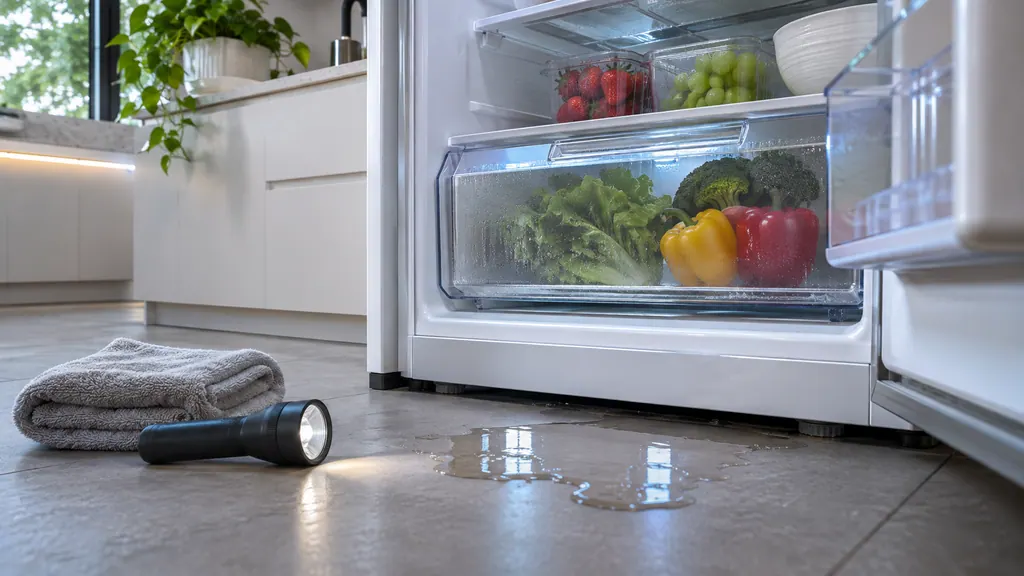
- The most common place for water is the bottom of the compartment, often condensation or a spill. 1
- The Autofill pitcher is not dishwasher safe. 1
- A damaged filter, or a non-genuine one, can leak. 1
- A few drips after dispensing for 3 to 5 seconds is normal. 1
- Water pressure must fill 6 ounces in under 10 seconds. 1
Where is my Samsung refrigerator leaking from?#
Samsung's article starts with this question, because the fix depends on the source. Many pools of water turn out to be condensation or an unnoticed spill. The most common place is the bottom of the compartment, below the crisper drawers. Other sources are the Autofill pitcher, the filter and the dispenser. 1
| Source | First step in the article |
|---|---|
| Autofill water pitcher | Remove the pitcher, drain the compartment, inspect and dry the parts 1 |
| Water filter | Remove the filter, inspect the filter and the housing 1 |
| Under the drawers or the fridge | Level the refrigerator, wipe the water away and see if it returns 1 |
| Dispenser | Clear the ice chute, purge air, check the pressure 1 |
What if the Autofill pitcher leaks?#
Remove the pitcher and dry it. Take off the rubber drain cap under the Autofill compartment, if your model has one, and drain all the water, even if you see none. Inspect the pitcher and lid for cracks, dry the pieces and reassemble. 1
- 1
- 2
- 3
- 4
- 5
Hand wash the pitcher with mild soap and water. It is not dishwasher safe, and the dishwasher can warp it and cause leaks. 1 If it still leaks, especially when out of the refrigerator, replace it. If the leak continues and is not the pitcher, request service. 1
What if the water filter leaks?#
Take the filter out and inspect both it and the filter housing. If the filter is damaged or is not a genuine Samsung filter, replace it. If the housing is damaged, or the leak continues with the filter removed, request service. 1
Samsung lists ways to tell a genuine filter from a counterfeit one. A genuine torpedo-style filter feels rounded where your fingers grip it, while a counterfeit one feels flat and sharp. A genuine canister-style filter has a serial number marked on the body and a rib, and counterfeit ones have neither. 1
After cleaning up, reinsert the filter. If the leak occurs again, replace the filter with a Samsung brand one, and if it still leaks with a new filter, request service. 1 See the ice maker water filter entry for the part.
What if the water is under the drawers or the refrigerator?#
Level the refrigerator, clear the water away and watch for a return. A correct level is not flat from front to back: the refrigerator is designed to tilt back slightly so the doors close on their own and water drains. If the wheels still touch the floor, the front is not high enough. 1
Clearing the water confirms that it is really a leak. Other causes include condensation, for example if the refrigerator was recently off or had no power, and a spill or leak from food in the refrigerator. If the leak returns, request service. 1
What if the dispenser drips?#
Dripping for a few seconds after dispensing is normal; leave the glass under the dispenser 3 to 5 seconds. Otherwise the usual causes are trapped air in the water line, ice residue in the chute, and a chute that does not seal airtight. 1
The article's steps run in order. 1
- Clean the chute and its seal. Clear all residual ice and make sure the chute is dry.
- Check the seal. With the right door open, look at the ice maker and chute that sit on the left door. If the gasket does not press flat against the ice bucket, warm air melts the ice and the dispenser drips.
- Inspect the water lines only if the problem began after the doors were removed, such as in an installation or a move. A bent water line at the coupler lets in air.
- Purge the air. Dispense into a large pitcher until it stops. If the stream sputters, empty it and dispense three more times.
- Check the pressure. The line should fill 6 ounces (3/4 cup) in less than 10 seconds.
Homes with a well system should have an air eliminator; if the dispenser starts dripping, that may not be working, and the article says to ask a plumber. 1
Model notes: some models with two water lines can deliver water and ice functions swapped if the lines are cross-connected, one group of models should have a nozzle that sticks down from the ceiling of the beverage center, and models with both a pitcher and a dispenser have an extra valve against dispenser leaks. 1
What changes after the doors were removed?#
If the dripping began after the doors were taken off, for example during installation or a move, the water lines and couplers are the first place to look. A line under the hinge cover that is not connected properly lets air into the coupler, and a bend at the coupler lets in air and causes a drip. 1
Reaching the coupler means following the door removal and reinstallation steps in your user manual. If you are not comfortable with that, it is a job for a technician, because a wrong reconnection can make the leak worse. 1
How do I tell a real leak from condensation or a spill?#
Dry the spot completely, then watch it. Samsung says to clear the water away first so you can confirm it is a true leak, because condensation and food spills look the same at first. If you recently had a power cut or switched the refrigerator off, condensation is likely. 1
Check the food too. A container with a cracked lid, a leaking carton or a bag of thawing food can drip onto a shelf and run down to the drawers. Lift the drawers out and look underneath for the source before you blame the refrigerator. 1
If the area stays dry for several days after you level the refrigerator and wipe it, the water was not a leak. If it returns, note how long it took and whether it appeared after dispensing, after a filter change or after a door was removed. Those details match the sections of Samsung's article and tell the technician where to start. 1
What was the water pressure check for?#
Pressure that is too high or too low can stop the water valve closing correctly, which triggers a leak at the dispenser. To check, dispense water into a measuring cup: the line should provide 6 ounces (3/4 cup) in less than 10 seconds. 1
If no water dispenses at all, confirm the water line is connected. The article points to a separate troubleshooting guide for no water at the dispenser. 1 A plumber can measure the household pressure if the cup test comes out slow or fast. This is the same check we ask about when we visit, so having the result ready saves time.
When should I book a technician?#
Book a visit if the filter housing is damaged, if a leak continues with a new filter or a new pitcher, if the dispenser leaks on a model with an Autofill pitcher, or if water returns after leveling and wiping. 1
We are an independent repair company, not part of Samsung. A refrigerator under Samsung's own warranty is repaired through the manufacturer. Otherwise book a visit. The technician agrees the price with you before any work starts, and the exact cost is confirmed after the on-site diagnostic. See our refrigerator repair page and the page on a leaking refrigerator.
Sources#
- Water leaks in a Samsung refrigeratorSamsung Electronics America (official US support article, samsung.com/us) · Page meta date 2024-09-16; fetched 12.11.2026 · Sections: Leaks from the Autofill water pitcher; the refrigerator's water filter; under the drawers; dispenser